What Is HTTP/2 and Why It Matters

HTTP/2 is the modern evolution of the HTTP protocol, standardized under RFC 9113, addressing the performance limitations of HTTP/1.1. Unlike earlier versions, HTTP/2 introduces binary framing, header compression (HPACK), request prioritization, flow control, and full multiplexing over a single TCP connection.

For embedded and IoT systems, these capabilities translate directly into:

  • Lower latency data exchange
  • Reduced bandwidth consumption
  • Efficient use of constrained network links
  • Improved battery life for connected devices

By eliminating Head‑of‑Line (HoL) blocking at the application layer and enabling multiple parallel streams, HTTP/2 ensures predictable and responsive communication even under fluctuating network conditions.

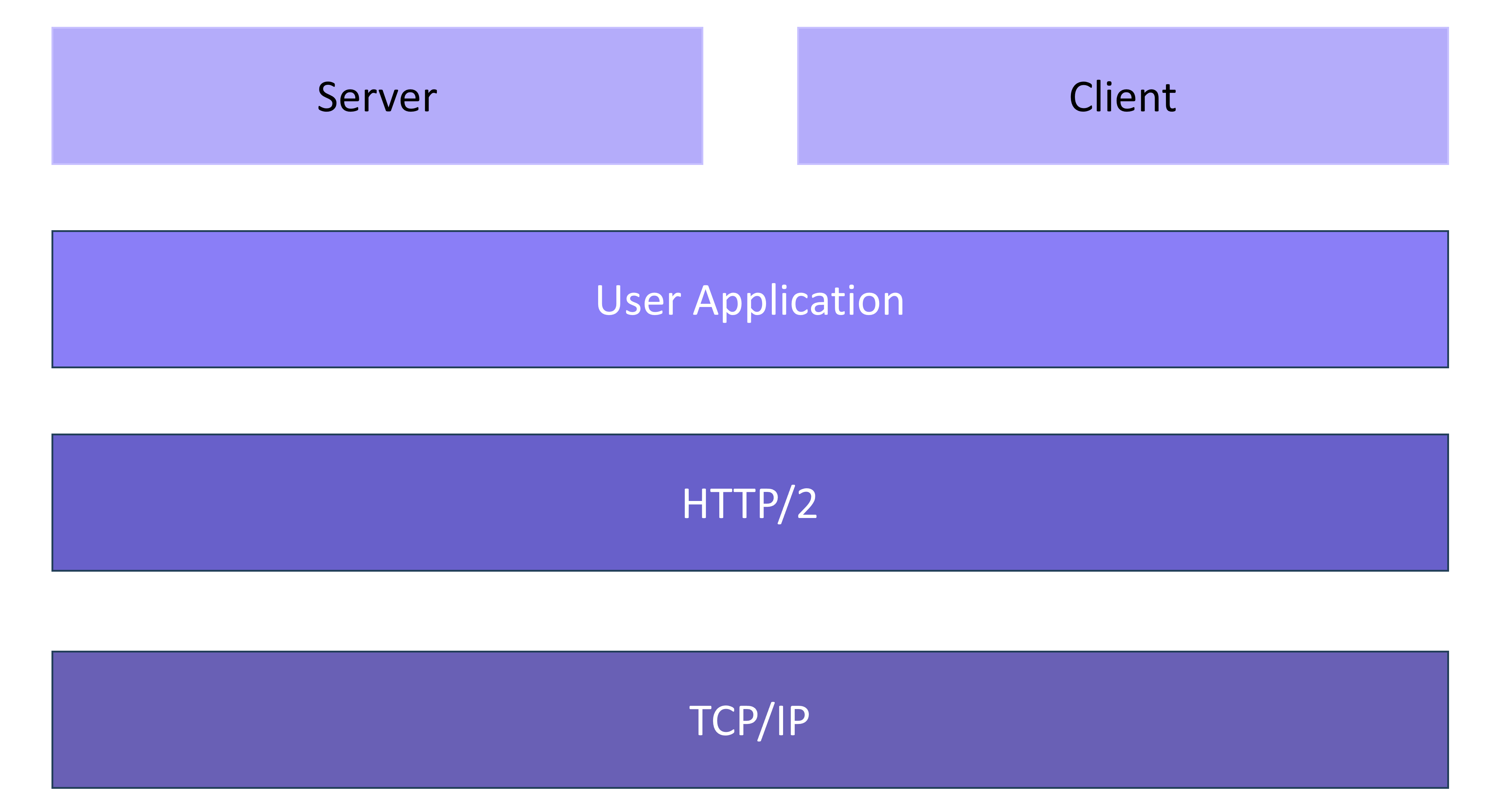
RAPIDSEA HTTP/2 Stack Overview

The RAPIDSEA HTTP/2 Protocol Stack is a lightweight yet feature‑complete implementation of HTTP/2 for client and server roles. Purpose‑built for embedded environments, it can be deployed on low‑cost MCUs, SoCs, gateways, and industrial controllers, with or without an RTOS.

Unlike desktop‑oriented or heavy middleware implementations, RAPIDSEA focuses on deterministic behavior, minimal memory usage, and clean API abstractions that seamlessly integrate with application firmware.

Key design principles include:

  • Embedded‑first architecture
  • Portability across hardware and OS environments
  • Clean separation of protocol logic and application logic
  • Long‑term maintainability and compliance

Striking Features of RAPIDSEA's HTTP/2 Stack

Wide Architecture Support

Wide Architecture Support

Compatible with ARM, x86, SH, PowerPC, AVR, PIC, and more, perfect for diverse embedded HTTP/2 hardware.

Cross Platform Versatility

Cross-Platform Versatility

Runs on bare-metal, RTOS like FreeRTOS, or Linux without modifications for flexible embedded HTTP/2 solutions.

Server Configuration

HTTP/2 Server Configuration

Handles multiple simultaneous client connections with seamless scalability for server-side embedded HTTP/2 deployments.

Client Configuration

HTTP/2 Client Configuration

Effortless connection to servers, ideal for IoT HTTP/2 stack integrations in resource-constrained environments.

Ease of Use

Ease of Use

Accessible via intuitive APIs for quick setup and integration in embedded HTTP/2 applications.

Portable and Secure

Portable and Secure

Written in thread-safe, MISRA-compliant C; includes TLS 1.3 for encrypted embedded HTTP/2 communications.

Small Footprint

Small Footprint

Under 50KB ROM/RAM, optimized for low-power MCUs in IoT HTTP/2 stack implementations.

High Performance

High Performance

Up to 50% reduced latency via binary encoding and prioritization in embedded HTTP/2 environments.

Why choose RAPIDSEA for your IoT deployment?

Reduced Power Consumption

Offers low-power mode by staying connected longer with a single TCP session and sending smaller packets (HPACK).

Optimized for Narrowband

Perfect for NB-IoT and LTE-M where bandwidth is expensive and limited.

Future-Proofing with gRPC

Our stack serves as the essential transport layer for gRPC, enabling modern microservices architecture on embedded hardware.

Security Integration

Native support for integration with TLS 1.3/mTLS, ensuring that "optimized" does not mean "unsecured".

Dynamic Memory Management

Configure the stack to use static memory allocation to avoid fragmentation in safety-critical applications.

gRPC & Modern Microservices

The industry is moving toward gRPC for efficient, language-neutral communication. However, gRPC requires HTTP/2 as its transport mechanism. RAPIDSEA provides the "missing link" for embedded developers.

By deploying our HTTP/2 stack, your device can communicate directly with cloud-native microservices using Protocol Buffers (Protobuf), bypassing the need for heavy JSON parsing and expensive cloud gateways.

Developer Experience & The Flint Configurator

Development speed is just as important as execution speed. The RAPIDSEA HTTP/2 stack is fully integrated with our Flint System Configurator.

GUI-Based Setup

Configure streams, window sizes, and header tables without touching a single line of header code.

Auto-Generation

Generate production-ready initialization code tailored to your specific MCU and RTOS.

Diagnostic Tools

Built-in logging and frame-tracing to debug network issues in real-time.

Licensing, Scalability & Commercial Advantages

RAPIDSEA offers a royalty‑free licensing model, tied to the MCU part number. This provides:

This model is ideal for startups and enterprises alike, enabling scalable deployments without hidden costs.

Use Cases for HTTP/2 Protocol Stack

RAPIDSEA HTTP/2 transforms embedded networking by solving latency and bandwidth constraints. These use cases demonstrate the stack's performance and versatility across diverse IoT deployments.

Contact sales to learn more
Industrial Automation icon

Industrial Automation

Multiplexing eliminates Head-of-Line blocking, ensuring sub-millisecond latency for real-time PLC monitoring & industrial control.

Smart Energy & Grids icon

Smart Energy & Grids

HPACK compression minimizes metadata overhead, allowing servers to manage thousands of concurrent connections effortlessly.

Connected Medical Devices icon

Connected Medical Devices

Enables secure, high-resolution data streaming via gRPC, providing reliable connectivity for modern, critical healthcare.

Automotive Gateways icon

Automotive Gateways

Prioritizes safety-critical V2X telemetry while managing infotainment and firmware updates over a unified interface.

Consumer Smart Home icon

Consumer Smart Home

Leverages Server Push to deliver responsive web interfaces and reliable firmware updates for appliances.

RAPIDSEA HTTP/2 Stack Package

Explore our comprehensive library of documents

Post-Purchase Document

Post-Purchase Document icon

  • QSG, Gtests
  • MISRA Compliance
  • HDD, LDD

Contact us

Gated Access Resources

Gated Access Resources icon

  • Test report
  • Pricing
  • Evaluation Package

Request Access

Technical Reports

Technical Reports icon

  • Resource Utilization
  • Tracability Matrix
  • Evaluation Version Binary (Windows, Linux)

Request Download Links

FAQs

HTTP/2 is a low-latency, binary-based web protocol that allows multiple requests and responses to be sent simultaneously over a single connection. Unlike HTTP/1.1, which processes requests sequentially and suffers from Head-of-Line blocking, HTTP/2 uses multiplexing, header compression (HPACK), and stream prioritization to significantly improve performance, especially on constrained or high-latency networks.

Ready to modernize your embedded connectivity?

Talk to RAPIDSEA experts to evaluate, integrate, and deploy the HTTP/2 Protocol Stack in your next product.

For further information on how your personal data is processed, please refer to the Rapidsea Privacy Policy.