UDS Diagnostics and CAN IVN Integration for Electric Vehicle Instrument Cluster
Snapshot
RAPIDSEA supported an Arizona-based eMobility startup in building a production-ready EV instrument cluster with a fully compliant UDS diagnostic stack for BMS and MCU. By deploying the RAPIDSEA UDS Protocol Stack and CAN IVN Stack together, the team delivered a validated, OEM-compliant diagnostic and display layer in 10 weeks — enabling the startup to meet their first vehicle platform's SoP milestone without building protocol infrastructure from scratch.
Customer Profile
Early-stage eMobility company based in Arizona, USA, developing electric light commercial vehicles for urban logistics. Engineering team carried deep expertise in powertrain and mechanical systems but limited bandwidth for embedded communication protocol development. Needed a software-defined vehicle communication layer that was production-ready from day one.
Business Context
Modern electric vehicles expose significantly more real-time data than ICE vehicles — battery cell voltages, state of charge, thermal management status, motor torque, regenerative braking parameters, and charging state all need to be acquired, displayed, and made available for field diagnostics. The customer's instrument cluster had to fulfil two distinct roles simultaneously: a real-time CAN IVN data consumer for the driver display, and a UDS diagnostic server allowing workshop tools to interrogate the BMS and MCU.
Key Challenges
- Dual-Role CAN Architecture: The cluster MCU had to simultaneously operate as a CAN IVN node consuming broadcast vehicle data and as a UDS server responding to diagnostic requests — two roles with different timing requirements and bus access patterns.
- BMS and MCU Diagnostic Coverage: Required to expose BMS parameters — cell voltages, pack temperature, SoC, fault history — and MCU parameters — torque demand, inverter temperature, error codes — via standardised UDS Data Identifiers across two ECUs with different DID schemas.
- Security Access Compliance: Security Access ($27) implementation required to prevent unauthorised DID writes and firmware update triggers, matching the specification used by their cloud-based diagnostic tool.
- Startup Resource Constraints: With a lean firmware team, the customer could not afford a multi-month protocol development cycle. Every week spent on CAN framing or UDS session management was a week not spent on cluster UI or OEM integration testing.
Target Platform
Renesas RH850/D1M1A - a graphics-capable automotive SoC combining a 32-bit RH850 CPU core with an integrated 2D/3D graphics engine. The RAPIDSEA UDS and CAN IVN stacks are both pre-validated on the RH850 family, eliminating silicon-specific bring-up risk from the project schedule entirely.
Why RAPIDSEA
- Pre-Validated on Renesas RH850: Both stacks ship with RH850-specific HAL implementations. The customer's team did not write a single line of CAN controller or interrupt handler code.
- Unified Vehicle Data Model: RAPIDSEA architecture shares a single internal data object layer between the CAN IVN acquisition engine and the UDS DID manager — BMS and MCU parameters available to the UDS server without data duplication or synchronisation overhead.
- UDS Server with Callback Architecture: Callback-based design allowed the cluster firmware team to hook diagnostic service responses into existing application logic in days without modifying the core ISO 14229 engine.
Solution: How to Implement UDS Diagnostics in an Electric Vehicle Instrument Cluster
CAN IVN Stack Integration: Vehicle Data Acquisition
RAPIDSEA CAN IVN Stack configured to receive broadcast frames from the BMS and MCU ECUs on a 500 Kbps CAN bus. Frame filter tables compiled from the customer's vehicle communication matrix. Acquisition engine populated the shared data object layer at the CAN frame rate.
UDS Protocol Stack for BMS and MCU Diagnostics
RAPIDSEA UDS Server configured with two DID groups — one mapping BMS parameters and one mapping MCU parameters. Diagnostic Session Control ($10), Read Data by Identifier ($22), Write Data by Identifier ($2E), and ECU Reset ($11) services implemented using the callback architecture. The customer's workshop diagnostic tool connected over CAN using a Vector VN1610 interface and successfully executed all diagnostic sequences on the first integration attempt.
Security Access Implementation
Security Access ($27) configured with the customer's proprietary seed-key algorithm. Implementation isolated the cryptographic routine behind a single callback — clean separation that simplified security review for fleet management platform integration.
Display Layer Integration
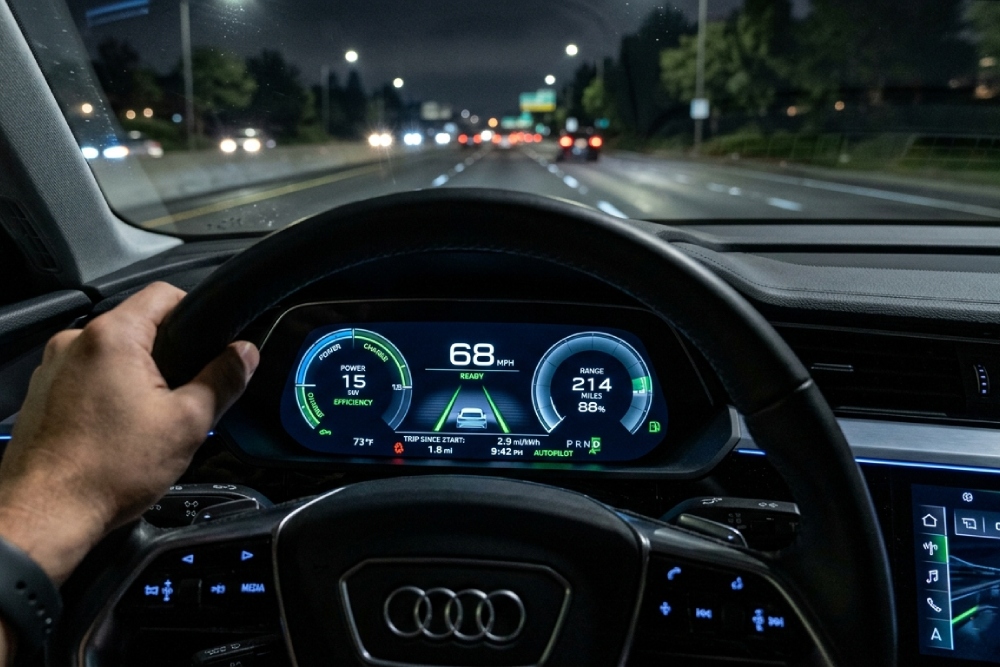
UI team integrated the shared data object layer directly into their Qt-based display application on the RH850's graphics engine. Real-time SoC gauge, cell temperature bar graph, motor torque indicator, and fault code overlay all drew from the same RAPIDSEA data objects with no additional data marshalling code.
Engineering Impact
| Metric | Result |
|---|---|
| Time to SoP | 10 weeks from HAL bring-up to OEM integration sign-off on Renesas RH850/D1M1A |
| Protocol development effort | Zero - both UDS and CAN IVN stacks deployed via configuration, not custom code |
| DID coverage | 100% across BMS and MCU parameter sets on first diagnostic tool submission |
| Data model overhead | Zero synchronisation code - unified data model between display and UDS server |
| Security Access | Compliant with cloud diagnostic platform on first handshake - no algorithm rework |
Conclusion
For an eMobility startup, building a UDS-compliant EV instrument cluster with real-time CAN IVN data acquisition on a graphics-capable automotive SoC is a significant protocol engineering investment. The RAPIDSEA UDS Protocol Stack and CAN IVN Stack gave this Arizona team a pre-validated, RH850-native foundation — letting them focus engineering effort on the vehicle experience rather than ISO 14229 compliance.
Connect with our team to evaluate RAPIDSEA integration for your EV platform.
Frequently Asked Questions
The UDS server needs to be configured with DIDs mapped to the BMS and MCU parameter sets — cell voltages, SoC, fault codes, torque demand. The RAPIDSEA UDS Stack's DID manager handles this through a configuration table, with each DID mapped to a callback that reads from the live vehicle data model. Security Access ($27) for write and programming services is implemented as a separate callback, keeping cryptographic logic isolated from the protocol engine.